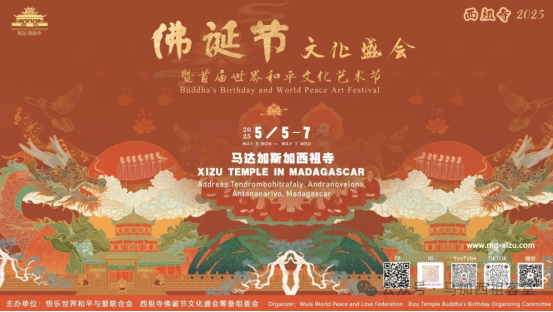
On May 5, 2025, "The Buddha's Birthday and the First World Peace and Cultural Art Festival" commenced solemnly at Xizu Temple, Madagascar.
The advent of the Buddha brought light to darkness and peace to conflict. On this auspicious anniversary of his birth, we gather at Xizu Temple with reverent hearts to honor his compassionate teachings.
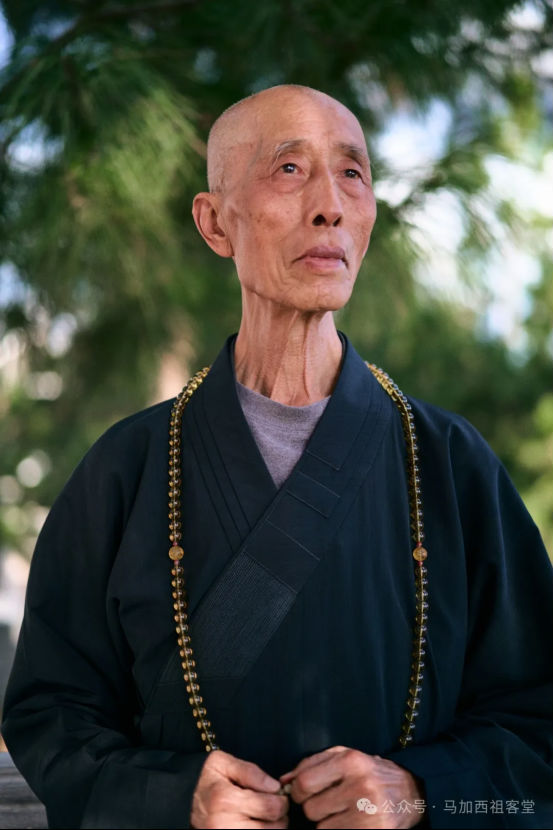
During the opening ceremony, the temple's abbot—Venerable Master Shi Wule, an eminent patriarch of Zen Buddhism—delivered a culminating address. He extended heartfelt welcome to distinguished guests from around the world while articulating the profound vision behind this cultural celebration.
Elevated in perspective and grand in scope, the address radiated both the bodhisattva's compassionate vows and a spirit of progressive inclusivity. Rooted in global peace, Venerable Shi Wule confronted modern dilemmas: material abundance amid spiritual poverty, persistent conflicts with insufficient reconciliation, and the unrealized potential for collaboration among religious and cultural institutions—a discourse that provoked deep reflection.

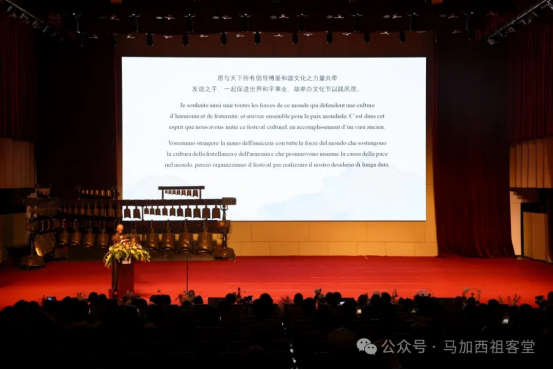
The original speech transcript is presented below for collective reading and appreciation:
"Humanity has entered an exceptional era—one marked by material abundance yet spiritual impoverishment, regional conflicts with escalating suffering, and religious divisions with self-righteous isolation. Cultural organizations worldwide have yet to join hands in fulfilling the noble vision of world peace, exemplifying the ancient adage: "The Dao is being fragmented under heaven."
While Master Hongyi once proclaimed, "To save China, we must chant the Buddha's name," I humbly propose for our times: "To heal the world, we must cultivate compassionate love."
My sacred vows are twofold: first, to propagate traditional culture and revitalize Chinese heritage; second, to dismantle cultural barriers and religious divides, overcoming the malady of separatism by establishing goodness, love, and virtue as humanity's universal moral denominators—thereby ceasing conflicts and extinguishing hatred. I extend my hand in fellowship to all cultural forces advocating universal harmony, jointly advancing global peace through this very festival.
My unconventional establishment of "Music Zen" pedagogy has drawn queries from some Buddhist traditions—a natural response. Yet since its founding by Śākyamuni, Buddhism has been the most inclusive and innovative religion. Transplanted from India to China, it integrated with native culture and flourished. Zen Buddhism, supremely adaptable, prioritized doctrinal innovation—witness the Sixth Patriarch Huineng's revolutionary teachings that spawned the "Five Houses and Seven Schools." By the Yuan-Ming dynasties, it had synthesized Confucianism, Daoism, and Pure Land traditions.
Modern masters like Xuyun, Hongyi, Taixu, and Yinguang all pioneered new approaches for liberating sentient beings. Following their legacy, I uphold Mahāyāna's "true mark of all phenomena," emphasizing perfect equality and non-duality. Inspired by Hongyi's karma, Xuyun's adaptability, Taixu's "Humanistic Buddhism," and Confucian musical-statecraft, I founded "Music Zen" as a skillful means—without regret—to benefit all beings. With sincere resolve, this virtuous seed shall bear fruit as we unite to realize world peace.”