Zen Master Wule believes that the essence of "Zen tea" lies in: simplicity.
"Zen music has three rhymes, and Zen tea also has three flavors," said Zen Master Wule:
Nowadays, when people mention tea and Zen, they often say "Zen tea is the same", which is actually wrong. The original saying should be "tea Zen is one", which means that the taste of tea and Zen is the same, so-called "tea Zen is the same as the heart". That is: you can realize Zen from tea. This "one" is the "one" of the same, not the "one" of the "one".
Speaking of "tea Zen", we use tea to understand Zen. Tea is the channel and Zen is the goal. The focus is on Zen, not on tea. Just like the famous saying that Master Zhao Puchu described Shaolin Temple back then, "The focus of martial Zen is on Zen, not on martial arts."
If we talk about "Zen tea", the focus will shift to "tea". I think it cannot be summarized with "Zen tea one flavor", but should be said to "Three flavors of Zen tea". This "three" is the three types of "three", that is, you can experience the three levels of Zen from tea.
Which three levels? Zen Master Wule said:
There are three flavors in a cup of Zen tea: one flavor is the same as sweet and bitter; the two flavors are the same as sweet and bitter; the three flavors are the same as sweet and bitter.
Zen Master Wule believes that from the first sip to the end of a cup of tea, one must go through three stages: "bitter and sweetness are intertwined, and the bitterness is gone and only the sweetness is returned to the ordinary and everything is empty", which is completely consistent with the state of Zen enlightenment and the experience of life. However, he also believes that the taste of "Zen tea" cannot be realized to the extreme through the act of "drinking tea":
Many ancient temples had the tradition of growing tea gardens. When we read the Tripitaka, we can see many records of famous Zen masters picking tea himself. The relationship between tea and Zen is by no means established through the act of "drinking tea". Zen Buddhism has always focused on getting close to nature and putting into life, advocating "no work for a day and no food for a day." This concept is not just to emphasize hard work, but more importantly, to show that "Zen" cannot be found without life.
Therefore, I think the relationship between tea and Zen must contain a broader and richer meaning. Think about it, ancient Zen masters worked in tea gardens, experiencing the hard work and getting close to the beautiful nature. Isn’t this “sweetness and bitterness together”? After experiencing hard work, growing tea, picking tea, and making tea, I finally got the harvest. Isn’t this “worry after all the bitterness”? However, in the minds of those who have realized the truth, all this is just "usual things". Whether it is bitter or sweet, it is all calm and gentle. Isn't this "sweet and bitter"?
Recalling the above relationship and starting from the spirit of Zen, I believe that the reason why ancient Zen masters attached importance to tea and formed the tradition of "understanding Zen with tea" and the concept of "one-smelling tea" must be based on growing tea, picking tea, making tea, and finally drinking tea and understanding tea, such a more complete and inseparable system from life. If only the "drinking tea" part is just the stage, the taste of "Zen tea" is too dull.
Obviously, Zen Master Wule disagrees with the hasty practice of "placing tea with Zen as Zen tea" in today's society. Unlike his development concept of "being brave to deviate from tradition and actively cater to the times" in Zen music, in Zen tea, he must "fully restore tradition and completely resist customs" to restore the links of growing, picking and making tea for Zen tea, "reproducing a classic model of Zen tea in the Tang and Song dynasties."
Tiantai Temple has two natural advantages. First, the natural environment of Tiantai Mountain is very suitable for growing tea. Since the 1950s, this has been the tea base in Hong'an County. The famous products produced by "Tiantai Cuifeng", "Tiantai Rain Fog", "Hong'an Cuifeng" have been awarded the titles of "provincial superiority" and "ministerial superiority". The construction land of Tiantai Temple turned out to be an abandoned tea farm.
Second, there are two ancient springs in Tiantai Temple, Qilin Spring and Yaoshi Spring. Good tea and good water are even more icing on the cake.
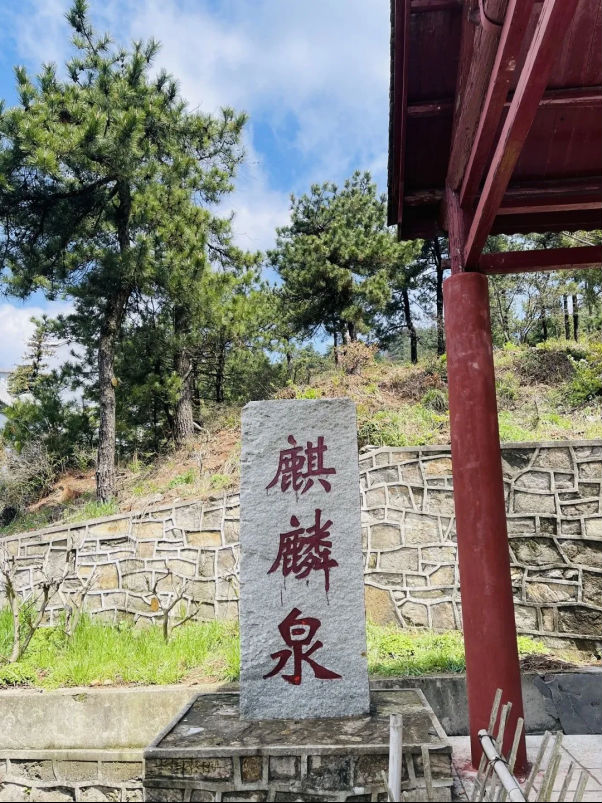
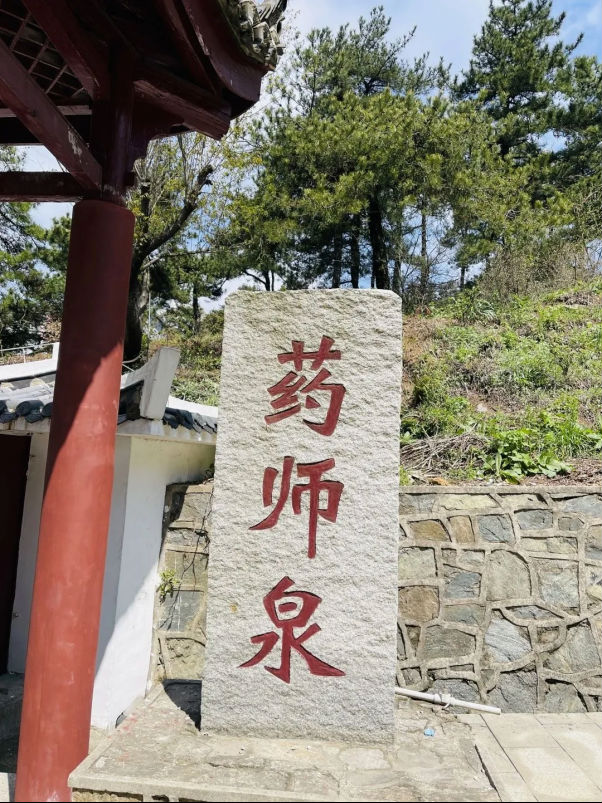
Zen Master Wule established the "Hong'an Tiantai Temple Zen Tea Research Association", founded the tabloid "Drink Tea" and personally led his disciples to manage 120 acres of wild tea gardens. “Not for economic gain, just to keep this tradition,” said Zen Master Wule. “The yield is very small because there is no fertilizer or pesticide, but it must be done.”
He proposed two ingenious ideas. First, we have registered a brand of "Tiantai Show List". "Show List" means "single instructions". A cup of tea can be drunk by millions of people and a variety of flavors. Zen means "just like a person drinking water, he knows the cold and warmth", and we must experience it on their own; and the two words "show List" are combined with the word "Zen".
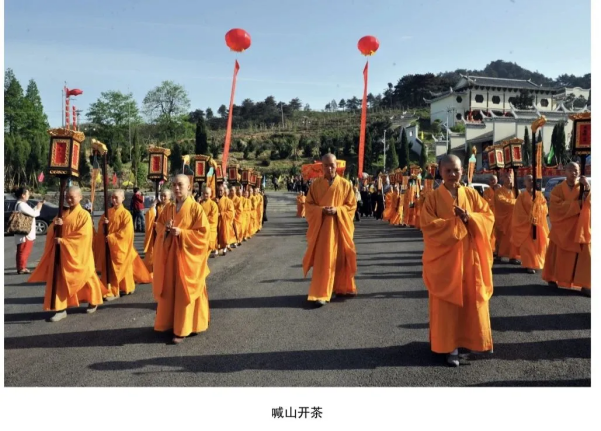
Second, he used the team of Tiantai Zen Orchestra to create a "Call the Mountain and Open Tea" ceremony. Before picking tea in spring, everyone bathes and changes clothes. He is led by Zen Master Wule, worships Buddha in the main hall, and then walks through the temple and into the tea garden in a mighty way. The bright yellow monks decorate the green fields, the magical instruments are ding dong, and the loud shouts of "Tea Garden in Tiantai Temple opens the mountains and picks tea" fill the mountains and fields, passing through the sky. Zen Master Wule recites scriptures to pray for peace and prosperity in the country, and tea farmers all over the world have a good harvest. When believers saw this scene, they felt like they were going back in time, and it was really like seeing a poetic picture from the Tang and Song dynasties.