The six senses of purity: the artistic state of the three meditations in Tiantai
Every component of Tiantai’s third meditation is something that has existed in ancient Chinese Buddhism. It is not new from the surface alone, but in Tiantai Temple, their connotations are far richer and more profound than we imagined.
Zen Master Wule said: Buddhism is not boring or dogmatic, but lively and full of interest. Especially Zen Buddhism has had a significant and profound influence in China and is widely welcomed by the general public from the upper class literati to ordinary people, not only because it has profound philosophical rationality, but also because it has widely influenced various cultural forms such as literature, music, art, and architecture, and has used these cultural forms as carriers to penetrate and infect people's lives more delicately and deeply. In other words, having a pair of "cultural wings" was originally the charm of Zen and the important reason why it was spread. However, in the later development, these wings were gradually destroyed, and Zen lost its richness and gradually withered into a monotonous word game.
What the "Tiantai Three Meditations" do is nothing more than "repairing the wings of culture for meditation." These wings are not forced by the snake, but are what they already have.
Obviously, in Zen Master Wule's view, the development of Tiantai's third meditation is more of a "return". He does not believe that the rich connotation of Tiantai's third meditation comes from his "injection", "all of which have been verified by history." He believes that what he has done is "just discovery and activation of historical experience."
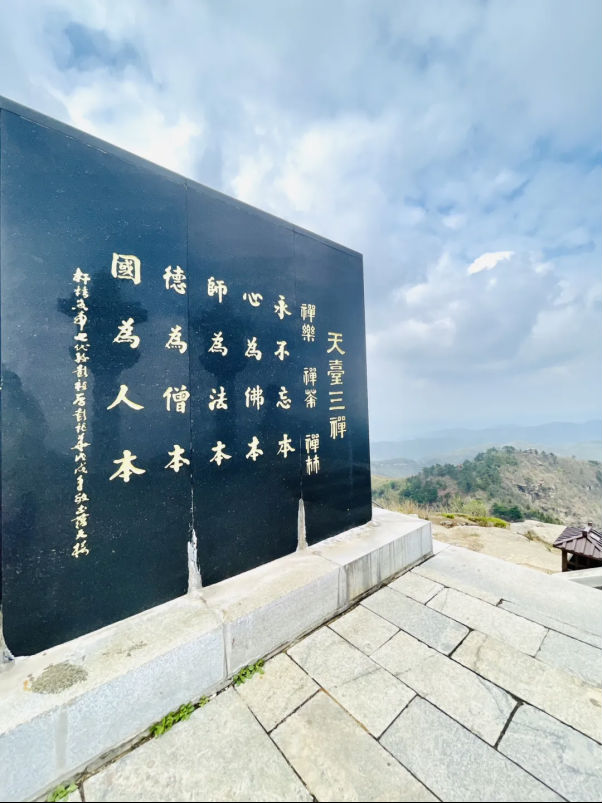
However, the combination of the three meditations in Tiantai is still amazing.
As we all know, the state of Buddhism pursues the "purity of the six senses". The so-called six senses refer to the six roots of the eyes, ears, mouth, nose, body, and mind that people come into contact with the outside world. The Sixth Patriarch Huineng said: "Just purify the original mind, so that the six consciousnesses can leave the six gates, be free from the six dusts, come and go, and be free from stagnation, which is Prajna Samadhi, free and liberation, and is called no miscellaneous actions."
It is not difficult to find that the construction of the three meditations of Tiantai is cleverly corresponding to these six senses. Tiantai Zen Forest creates a space for Zen, nourishing the eyes and making the "body" come into the environment, which is the person in Zen; Tiantai Zen Tea enters the "mouth" and "nothing", refreshing the heart and spleen, and transforming infinite Zen into the lungs, which is the Zen in the human being; Tiantai Zen music is the sound of the soul, which enters the "ears" and "mind", which blends with people's heart and mind, which is integrated, which is the mind in Zen, and Zen in the heart and one and three are combined to complete the pure infection of the six senses, which is a carefully designed combination.
According to Zen Master Wule's design concept, he hopes that through the construction of Tiantai's third meditation, Tiantai Temple will become a "six pure" world full of Zen and flowing Zen everywhere; here, "Zen" forms a "close contact" with people in all directions and senses, and people can feel the Zen and Zen life with all their bodies and minds.
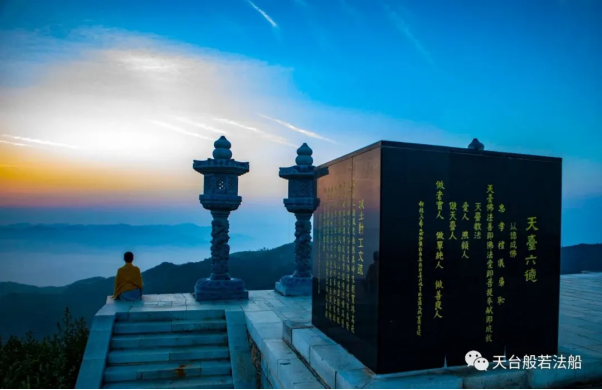
More importantly, he believed that all the three meditations in Tiantai have the function of "moral education". "The three meditations in Tiantai are just facilities, and the six virtues of Tiantai are the purpose." He hoped that the three meditations in Tiantai can be closely combined with the six virtues of Tiantai to "serve the six virtues of Tiantai", saying:
Wang Yangming said, "Making rituals and music must have the virtue of harmony." This shows that "music" is not only a means to cultivate "virtue", but also cannot be accomplished without "virtue". It is based on "virtue", which in turn promotes the cultivation of "virtue". "Zen tea" is the "monk's family style". Its role in cultivating one's own character and promoting morality is not necessary. Similarly, "there are many famous mountains and monks in the world", and accompanying heaven and earth, nature, mountains and rivers is not only conducive to understanding life, tempering will, and maintaining morality, but this behavior itself is a manifestation of a noble personality.
Therefore, with the "Six Virtues of Tiantai" as the ideological center and the "Three Meditations of Tiantai" as the formal main body, and the two are one inside and one outside, Zen Master Wule built the complete "new style" of Tiantai Temple in his mind.